We build the training worlds for construction robots.
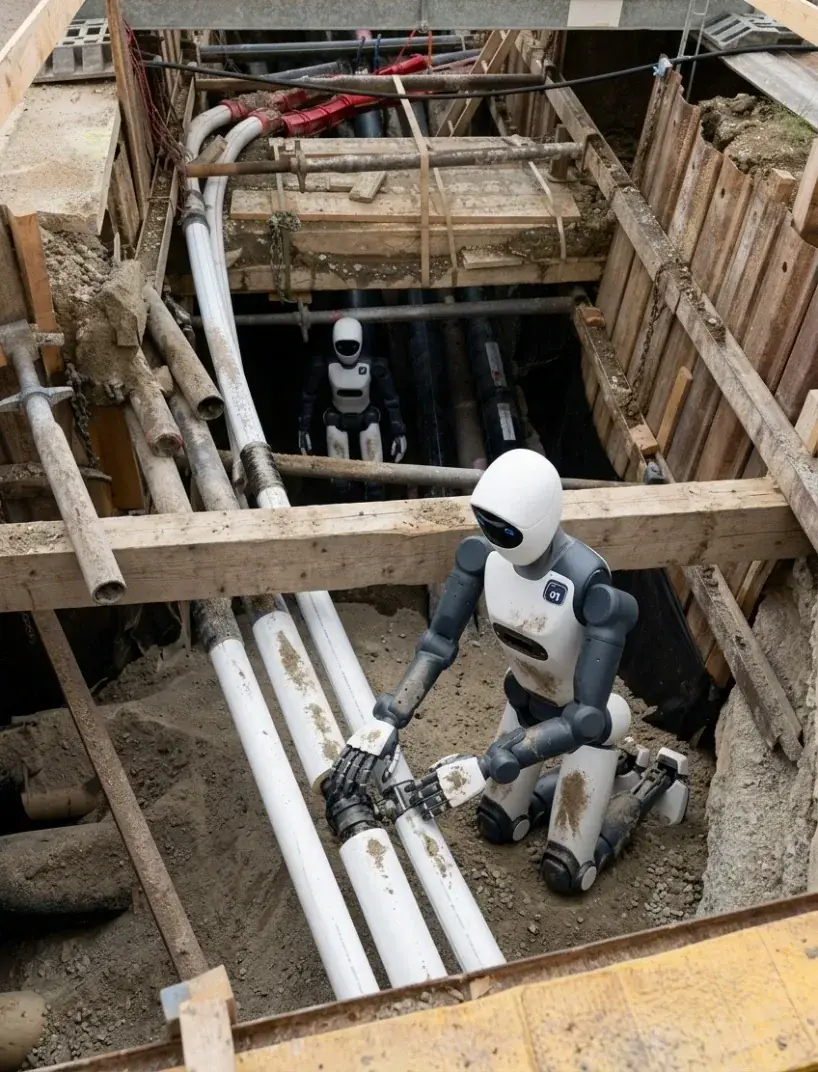
We turn real construction sites into simulation-ready 3D worlds, so robots can learn the job through reinforcement learning (RL).
01 | Site
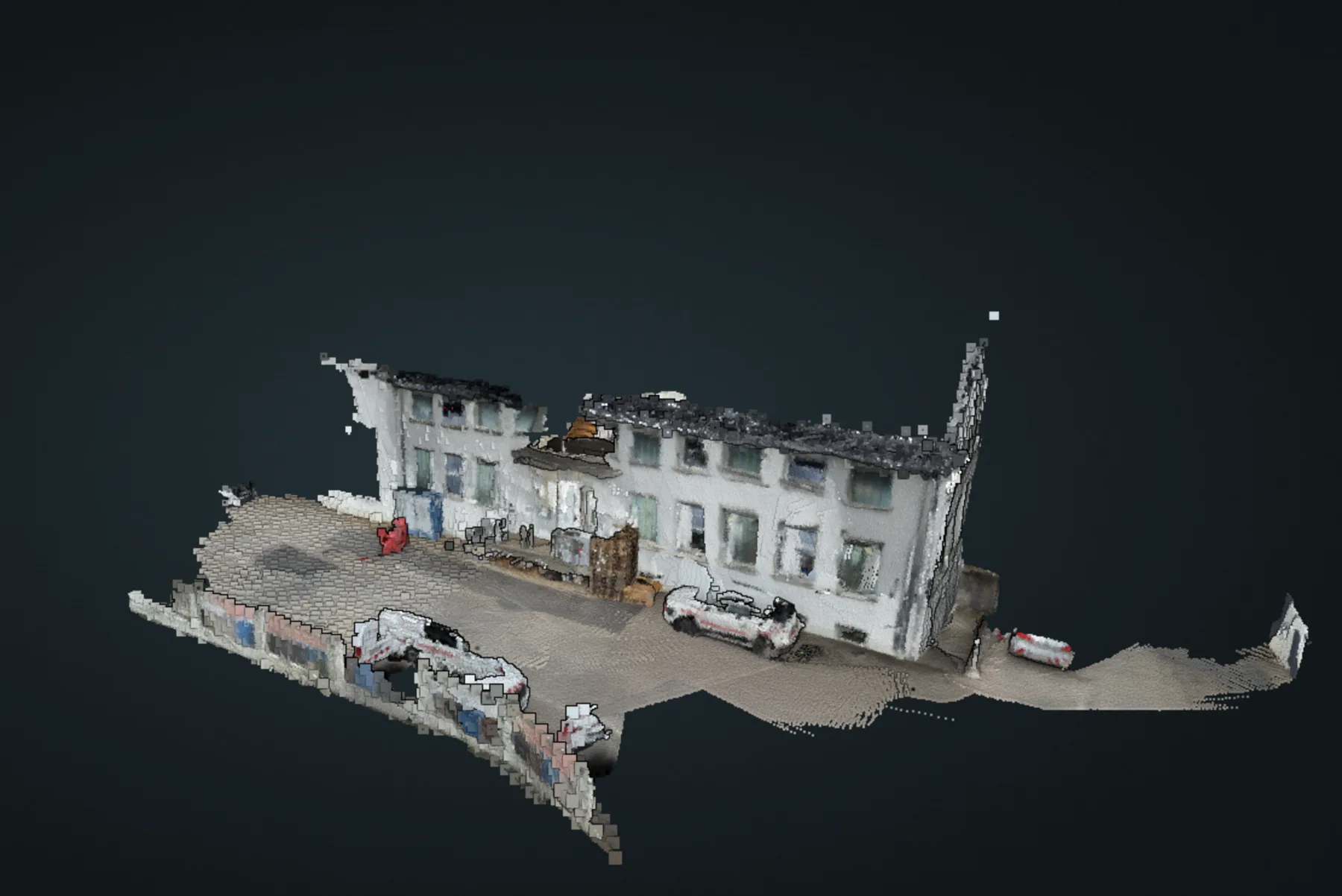
One real trench, scanned with a phone.
02 | Robot
Measured, it becomes a world a robot can learn in.
03 | Learning
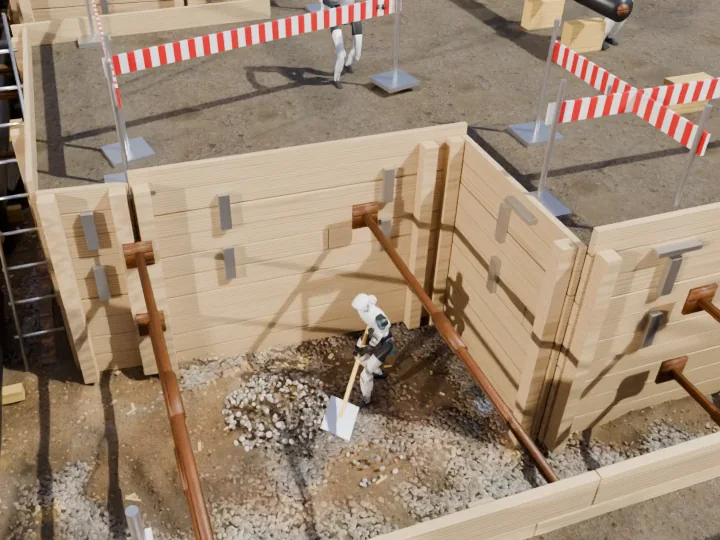
Try, get graded, improve.
01Site
02Robot
03Learning
The gap
Construction is the one industry that stopped getting better.
Since 2000, manufacturing has become 90% more productive, construction worldwide only 10% (McKinsey, 2024). In the US it went backwards: a construction worker today produces less than one did in 1970 (Goolsbee & Syverson, NBER, 2023). A $13 trillion industry, 13% of global GDP (McKinsey, 2020). Autonomy is arriving, but one machine and one task at a time.
Manufacturing+90%
2000Today
Construction worldwide+10%
2000Today
Construction in the US−35%
2000Today
Productivity since 2000. McKinsey, 2024.
The missing piece
Robots will close the gap. They have nowhere to practice.
AI became useful when models stopped imitating and started learning from tasks: try, get graded, improve. Robotics is at that moment now. In factories and warehouses, robots already make a measurable difference, because those environments can be simulated and trained in.
A construction site can't. Every site is unique: no production line, no repetition, no dataset. Reinforcement learning needs a world to act in and a grade to learn from, and for construction neither exists. One practice world is not enough. A robot needs thousands.
Today's construction robots are single-purpose. To move across a site and handle many tasks, they need the missing piece: real sites to train in, with ground truth to be graded against.
01Try
02Get graded
03Improve
Sim-to-real works: at ETH Zurich, an excavator trained in simulation dug for real (Egli & Hutter, ETH Zurich, 2022).
What we do
We digitize construction sites into training worlds.
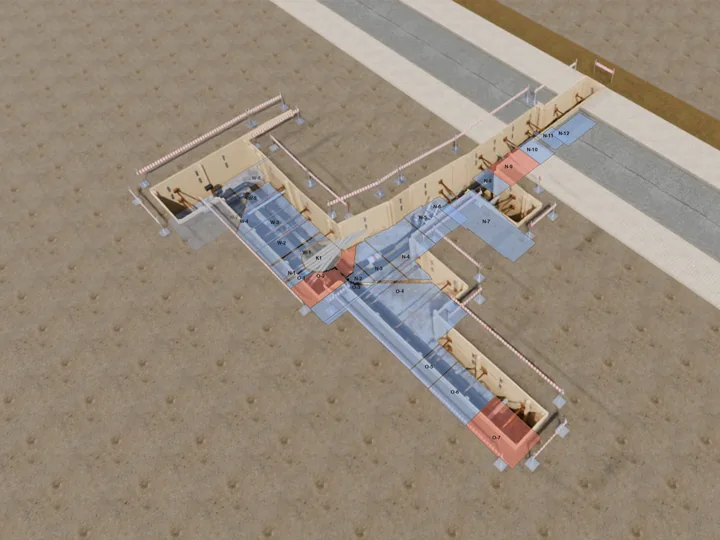
Our own SLAM reconstructs a site in metric 3D, and a semantic layer labels every object in the point cloud. We start underground, where data is rarest: a trench is open for days and closed for decades. From there, we move up and out.
01 | TodayUnderground networks
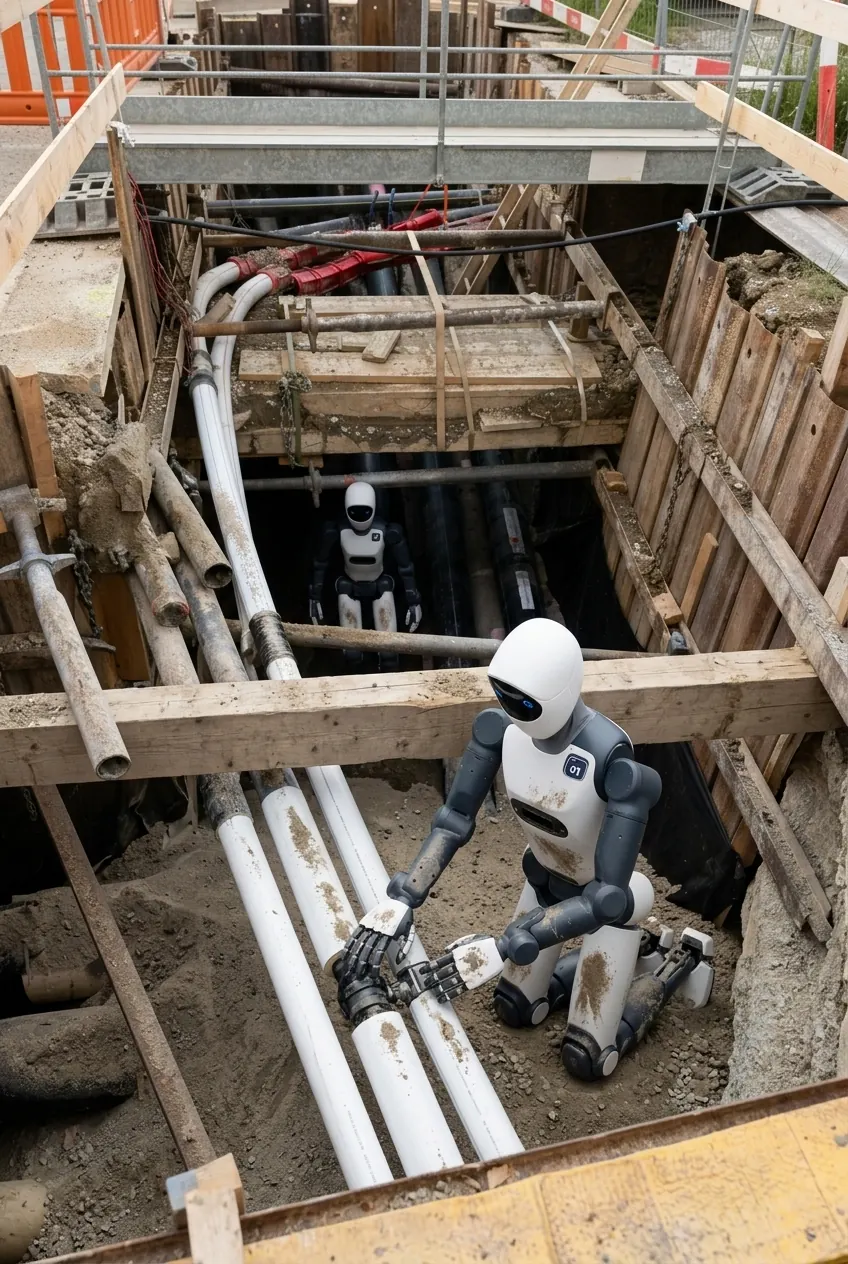
Pipes, cables and house connections.
02 | NextIndustrial sites and data centers
Cabling and cooling lines.
03 | NextBuildings
Offices, supermarkets, cellars, heat pumps, kitchens, refits. Every plan starts with a measurement.
04 | NextEarthmoving
Pits, roads, foundations. Where excavators learn.
Real reconstruction from a phone scan: a building, its street and the trench in front of it.
For robotics
Measured, not generated.
Generated worlds look realistic. Measured worlds are accurate, and sim-to-real only holds when the sim is real. Construction is a sequence of solved surprises, and a measured world keeps every one of them.
Scene
Metric 3D reconstruction, millimeter-accurate, every object segmented and labeled.
Task
The job and its progress, captured across build stages.
Surprises
The challenges a robot has to learn: wherever reality diverges from the plan.
Grade
Ground truth: the correct end state, checked against plan and norm.
For utilities
Faster.Leaner.Safer.
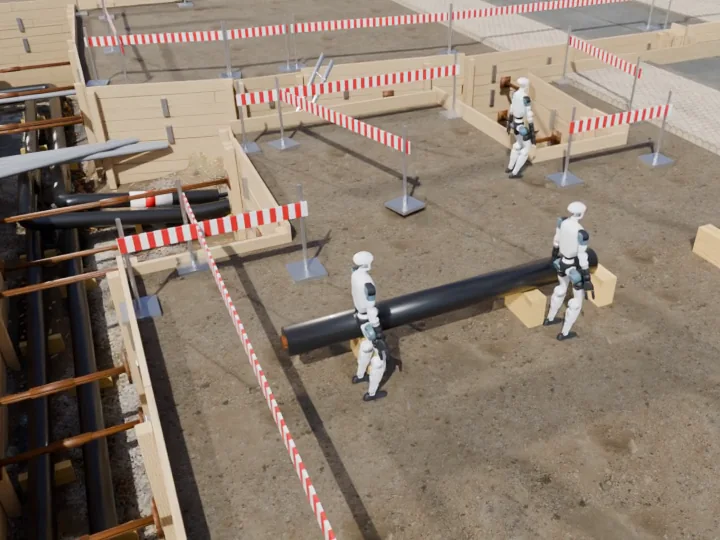
When robots take on the hardest work in the trench, streets close in days instead of weeks or months. Networks get built faster and at lower cost, and people stop doing the work that breaks their backs. That's the future we're building, together with the contractors and utilities we work with today.
Why now
Three things just became true at once.
450M+
Phones. Active iPhone Pros, survey-grade with our SLAM since this year (estimate based on Counterpoint, CIRP).
$800M
Robots. Raised by autonomous excavator startups since August 2026 (SiliconANGLE, TechCrunch, 2026).
600,000 km
Streets. Opened every year for new lines (Destatis, BDEW, ASCE, PHMSA).
Let's talk
Let's build it.
Building robots for construction? Tell us which sites and tasks they need to learn.

 Inception Program

